Liminality
Lost in the world, lost to the world

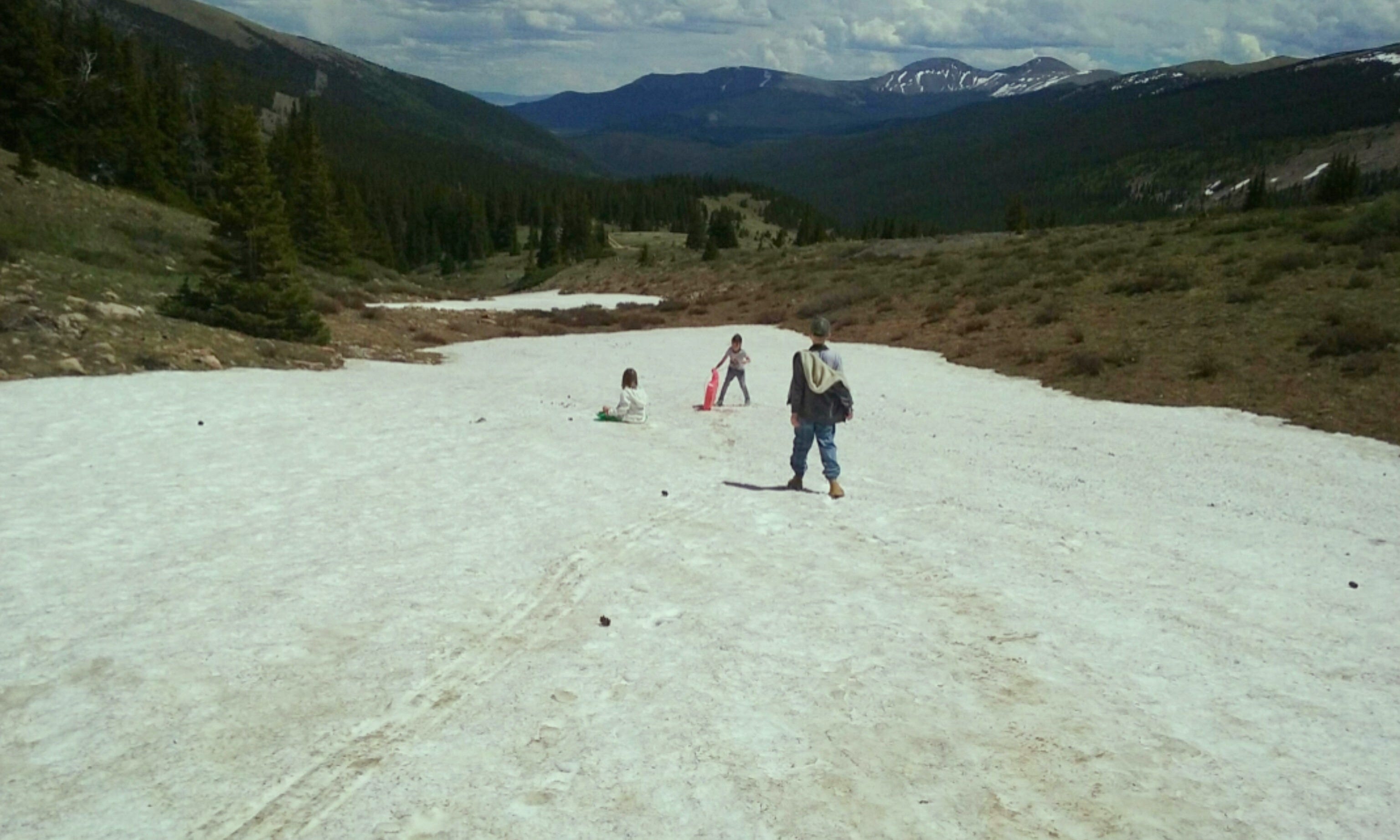
“Impossible to go on, impossible to descend, impossible to stay where he is.”
- Edward Abbey (The Monkey Wrench Gang)
Antelope Boy
A tale from the Pueblo Indians tell of a couple, who, on a walk through the plains, were attacked by Apache. In an effort to escape, the couple fled to a nearby cave where they were safe but surrounded. Like all good timing, while this couple was trapped in this dark gape in the earth, the woman gave birth to a little boy.
In an attempt to flee the cave to seek help for his wife and child, the husband was killed, leaving the wife and her new born child alone in the earth-locked darkness. Extreme hunger and threats of starvation eventually left the woman no choice but to retire from the cave by night and search for what nourishment she could whilst her babe lay asleep in the cave. Alas, in this attempt she was seen and chased by the Apache. Running as fast as she could, she was able to dodge the antagonists and reach her families village.
Days had long past before she was able to rush back to the cave to retrieve her baby boy who in his infant stature was her whole world. However, when she returned to the dark cavity whence she left the boy; he was gone.
Lost in the world
Where are we when we are in transition?
I suppose that we are not where we were prior to the change, nor are we the persons we were prior either. However, we are not anywhere new, as we have not yet met the resolution of our change. We seem to be nowhere in the truest sense, completely absent of any point of orientation, cast into oblivious chaos where the only certainty is utter uncertainty.
What a lovely picture, one of grays and blacks in distorted mesh of one another, swirling and coagulating in no orderly way. To even call it anything would be too stable of a definition, to call it hell would be a blessing.

This is the liminal; unknown, uncertain, unrestricted, undefined yet directionally transitional. A word used for that which lacks a word, the liminal is where we stand where there is no ground to stand upon.
As confusing and absurd as this is, it is the best that we have. For what else are we to call something that has nothing to call. Deprived of all certitude, liminality is defined by its absence rather than its presence, naught rather than nascent.
What I pose here is what is called an apophatic definition; derived through negation opposed to affirmation. We cannot find means to display the form of liminality, but we have its shadow.
Within the story, Antelope boy has just entered the liminal. He is not within the cave, yet we do not know where he has gone, nor how he has gotten there. All that we know is that we don’t.
With his mother in utter desperation to save him and herself, she departed the cave in search of food. In the deathly quiet mountain which he was left alone, the baby cried out to the world; as his world had suddenly disappeared. Among the ancient sand stone which stood as witness to hear these cries, a coyote walking along a nearing ridge heard their echo, bellowing from the depths of the earth.
Perhaps out of curiosity, perhaps out of pity, the coyote found the child, and in an effort to console the babes continued lament, carried the child across the plains until it found a roaming heard of antelope. To witness a coyote commune with antelope is a unfathomable sight, yet, this world will do all it can to save the life of a child, even if it means uniting wolves and sheep.
“Will you care for this poor child?” The coyote pleaded with Mother-Antelope.
“I will.” Mother-Antelope replied without hesitation, speaking not only from an instinctual nurturance all mothers are given, but in a lament of her own, as to mother within these harsh lands is to weep for the babes it has taken from you.
It is here that our journey with Antelope Boy subsides, though it has just begun.
Lost to the world
Guided by a trickster, our character makes his final venture out of the liminality of cave and plains to a new found home, Mother-Antelope.
As mentioned earlier, the liminal is directionally transitional. Not a place of rest, it is the underworld with which our hero’s journey takes takes place. To specify further, the liminal is the ambiguous chaos that one makes ones new home.
Notice, Antelope Boy never left the plains, which is a physical manifestation of the ambiguity he traversed, he found and made a home within them. This shifts our perspective on the liminal to not only a place but a transmutation which though initially uncreated, becomes the newfound created through passage and discovery.
Resting within the transitional, the liminal is no longer an absence but a continually undiscovered presence. Antelope Boy must come to know the unknown he now resides. This is the directional nature of liminality; a journey of gnosis.