Anima
Our lady, our light

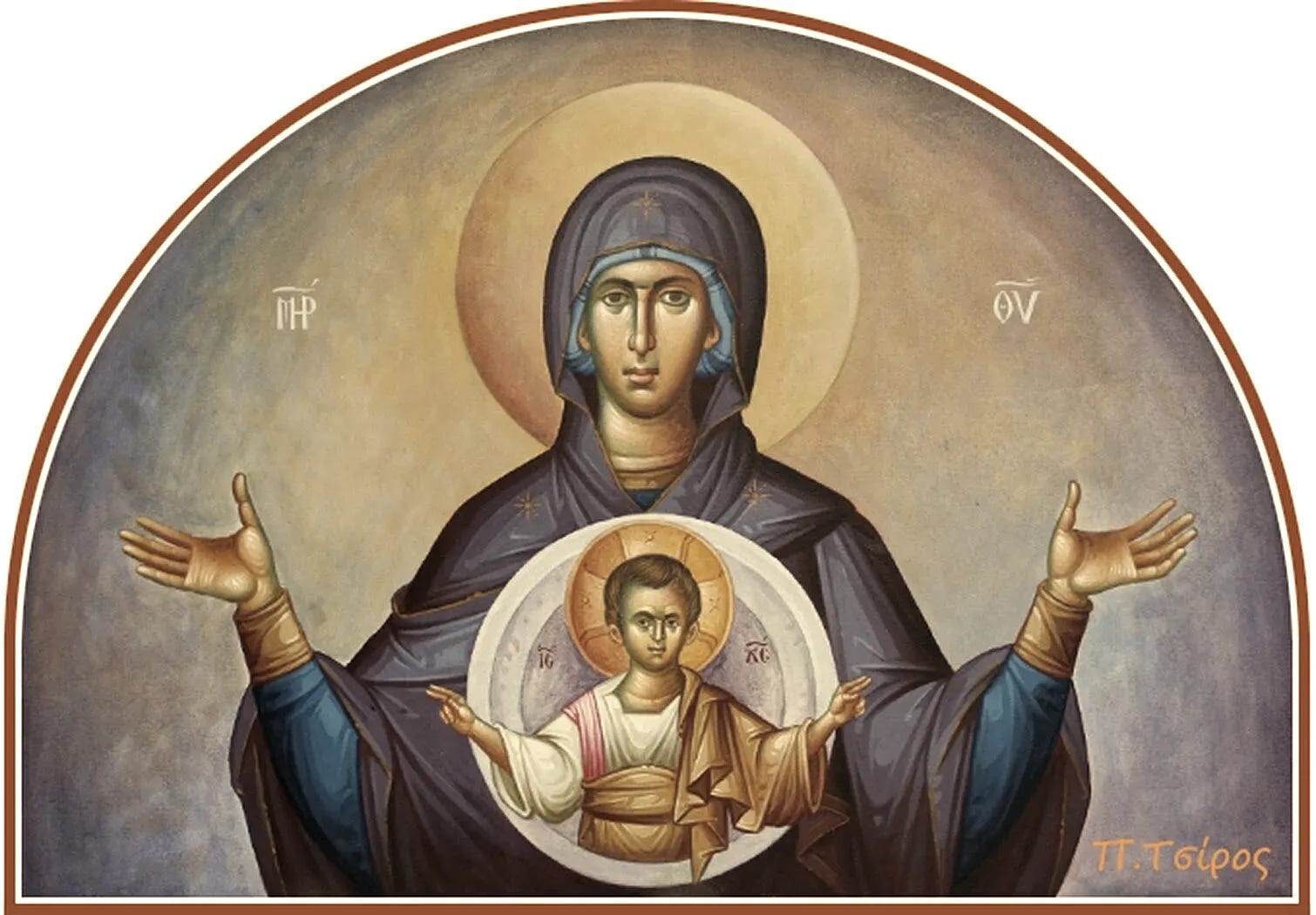
“…grace flowed into her body, in order that with it she might conceive the Son of God”
~ St. Thomas Aquinas
Theo
[Greek θεός, meaning “God” or “divine.”]
(Poetic Paraphrasing of Luke 1:26–38)
The night was quiet and dark, as if in an anticipation, waiting in stillness. Above the young woman’s head were stars jeweled across the sky in radiant array. These stars too dazzled with anticipatory excitement. The young woman named Mary contemplatively attended this night, for the only thoughts that wandered about her mind were those of bewilderment - of how the night sky could imbue such heavenly beauty.
One of these stars, out in the distance became increasingly bright, soon filling up the darkness of the night sky itself. This light approached Mary and greeted her with wonderful words of favor, telling her that the Lord was with her.
Mary was numinously amazed, never before had she felt the warmth of such a light, which shined with incomprehensible luminosity and spoke words of the sweetest honey. She could not believe what she was experiencing.
The light reassured her: she had found favor with God, and not only this, but so too would she conceive a Son who would be named Jesus - the Son of the Most High, destined to reign forever.
The young woman was perplexed and asked how all this could be, since she had not known a man. The light explained that the Breath of God would overshadow her, and the child would be holy, the Son of God. As proof, he told her that her relative Elizabeth, once barren, was already six months pregnant.
Mary was mystified by what was happening. With such beauty and grace had this presence come before her, speaking such astounding and delightful prophecy. In numinous awe filling her with a gust of courage, she looked at the light in humble response and said: “I am the Lord’s servant. Let it be to me according to your word.”
At this reply, the light suddenly diminished - leaving the young woman in the company of the night once again, leaving her in the stillness of grace.
Our Lady
Archetypally displayed across a variety cultural contexts, the divine feminine is one of the most pertinent metaphysical images depicted. From ancient Hindu traditions and myths to Judeo-Christian narratives and texts, the importance of the feminine radiates unobtrusively from the background within all major cultural cosmologies.
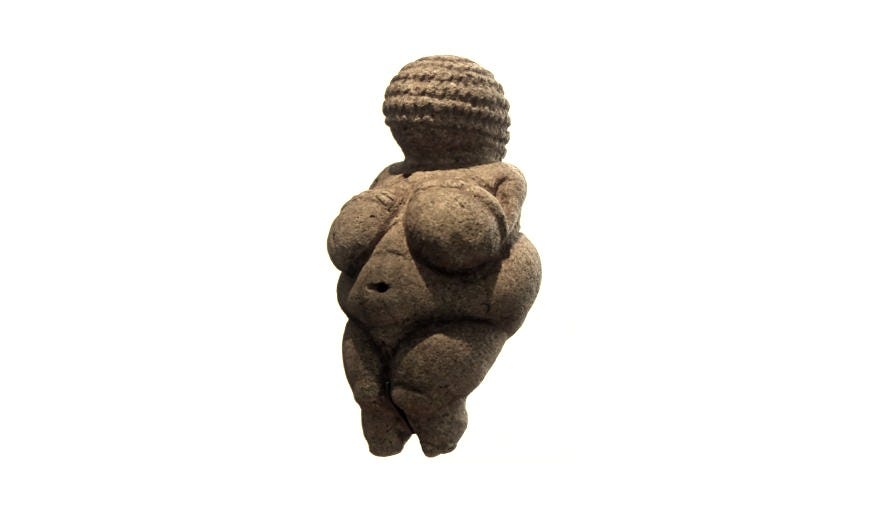
Curiously, this notion is not explicitly imported within myth and story, but rather, it is a notion that seemed evident to archaic man. For a culture that does not respect the mother is one that shall surely perish.
A society that does not venerate the vulnerability and exceptionality of its women will not sustain.
But the notion of the divine feminine goes deeper than this anthropological degree of analysis. The divine feminine does not only hold great consequence societally but so too for the innerworkings of the individual.
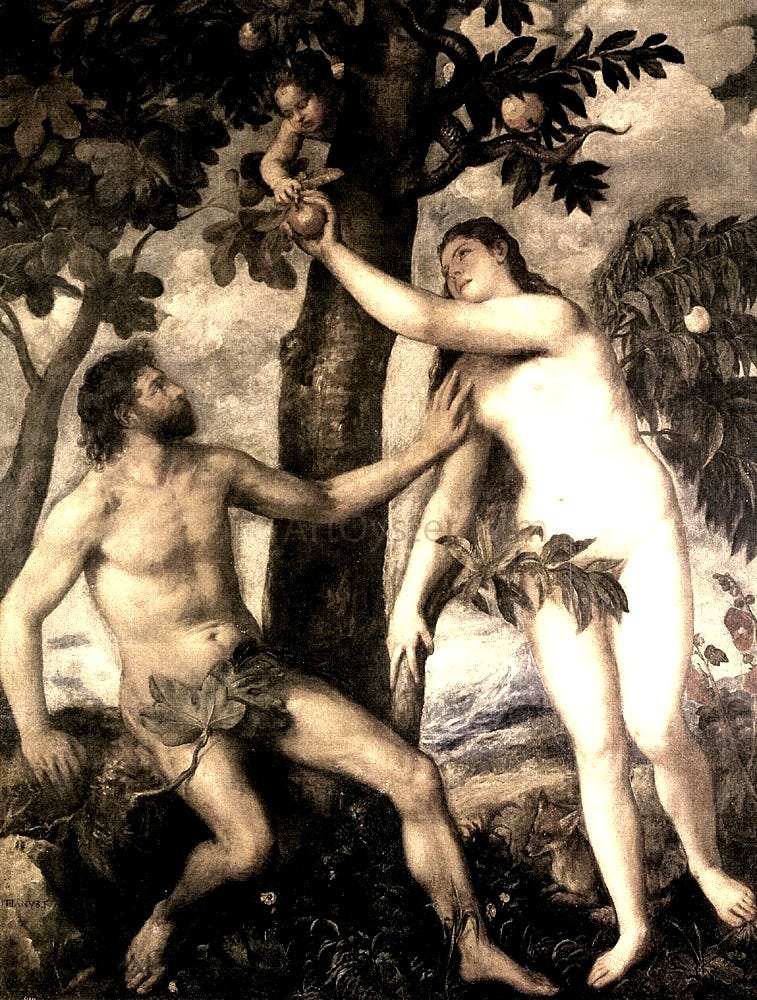
Who is She to us?
Just as within myth does the feminine radiate from the background, so too does She play not a shiny role in our inner worlds but a foundational one. As the feminine is the giver of life, Her essence is not one that is axiomatically numinous in nature, but rather is one that points toward the numinous.
Her function is specified as the giver of life, She intercedes and mediates between us and the Divine. And in this life giving role She herself is divine.
The feminine thus becomes the bringer of warmth; the hearth of our beings.
Tokos
[Greek τόκος, meaning “birth,” “childbirth,” or “offspring.”]
(Poetic Paraphrasing of Luke 1:39–56)
Not long after the young woman encountered the light, she hurried into the hill country to visit her relative Elizabeth to verify the words the angelic light had spoken.
It was within the instant that Mary gazed upon Elizabeth that she found that she was indeed with child. This filled her with great enthusiasm and spiritedness, for the light’s words were not superficial prophecy but truth!
With divine ecstasy, there seemed to be an indescribable energy which arose from Mary’s womb, a warmth not of this world. This heat grew as did the angelic star, crescendoing to a magnitude that lead her to joyfully cry out:
“My soul magnifies the Lord, my spirit rejoices in God my Savior. He has looked upon me in my lowliness, and from now on all generations will call me blessed. The Mighty One has done great things for me, holy is His name. His mercy flows from age to age for those who honor Him. He scatters the proud, brings down the mighty, and lifts up the humble. He fills the hungry with good things, and sends the rich away empty. He remembers His mercy to Israel, just as He promised to Abraham and his descendants forever.”
Elizabeth listened to Mary’s words in the same awe that Mary had witnessed the angelic light, for the lord had imbued Mary with His grace, as she now glowed like a star herself.
Mary stayed with Elizabeth for three months before returning home, carrying with her the divine mystery of grace which magnified within her.
Our Light
It is vital to note that the giver of life not only resides within cultural depictions, but rather, She rests within each of us on a deeply personal level. As said above, the feminine intercedes between us and the divine, allowing for light to shine through sight She offers - God is magnified through Her.
The divine feminine offers an impressionable posture to our minds, our bodies, and ultimately our spirits.
Through Her, the sacred is able to pervade into our innermost parts, so God may make a dwelling place within our spirits. This pregnable posture provides a doorway for the deific to wed with us in sovereign union. Put differently, the divine feminine is a vessel to encounter something beyond ourselves, breaking down self-imposed barriers that limit our ability to witness the innate beauty which ever surrounds us.
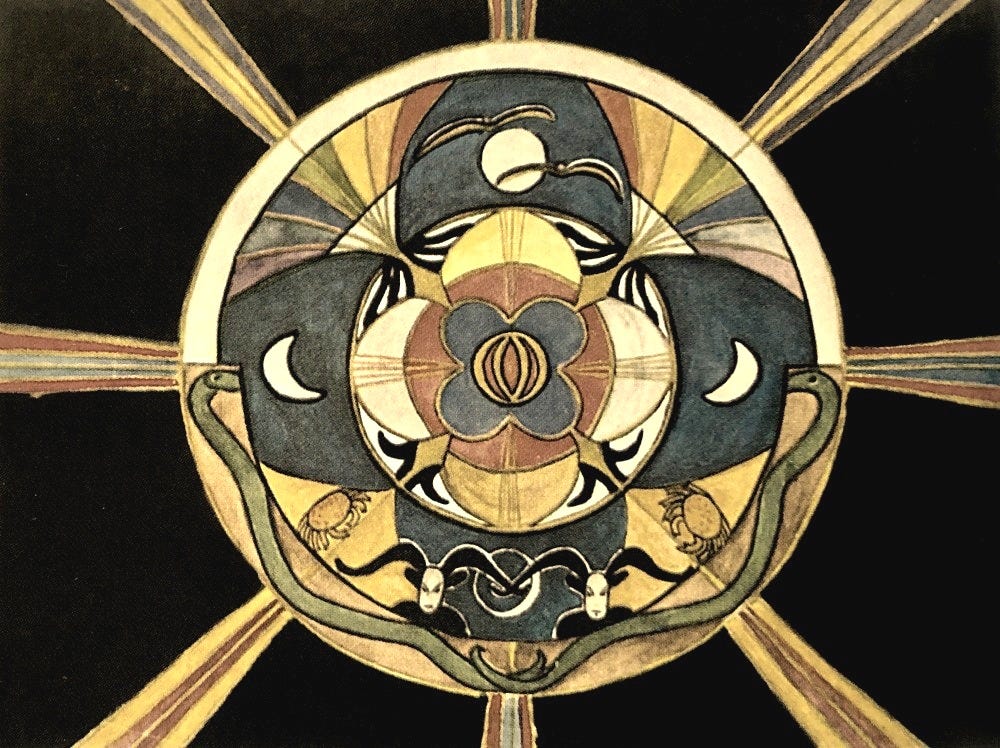
It is thus, that the divine feminine not be the center of our adoration, but our way of knowing such reverence.
This is all to say, the divine feminine is the psychospiritual organ of receptivity itself - overseeing our ability to put aside our egos and dwell fully in Another much greater than ourselves.
She has many faces and many names, yet her beauty lies not in being seen - but in how, through her, we are finally able to see.
Photo Credit:
Photo 1: https://www.stbasil.com/news/2019/11/20/a-temple-in-the-temple
Photo 2: “Venus” (or Woman) of Willendorf, c. 24,000–22,000 B.C.E., limestone, 11.1 cm high (Naturhistorisches Museum, Vienna; photo: Steven Zucker, CC BY-NC-SA 2.0)
Photo 3: Titian. (ca. 1550). The Fall of Man [Oil on canvas]. Museo del Prado, Madrid, Spain. https://www.museodelprado.es/en/the-collection/art-work/the-fall-of-man/
Photo 4: https://artsofthought.com/2022/04/12/major-jungian-archetypes/